Thursday, October 4, 2012

Be Pitch Perfect


In New York City, business professionals can go to a different networking event every night of the week. We’re all there to “pitch” ourselves, our products and/or our services. It’s a terrific way to meet prospective clients, leads and contacts. But how many of us take the time to hone our pitching skills? 

My son is a baseball pitcher. He played baseball for the Ivy League and last summer got drafted by the MLB by the Cincinnati Reds. In addition to his team coaches, he sees a pitching coach regularly to improve his conditioning, develop his muscles, and more importantly, to develop his muscle memory. His pitching coach makes him go through the motions of his delivery over and over again.  Once my son masters a particular motion for a particular pitch, he adds a new pitch to his repertoire.

“Sales Pitch”, “Elevator Pitch” “30-second Pitch” It’s no coincidence that the word “pitch” is used to describe selling yourself or your product. Sales pitching like baseball pitching, is a talent not to be underestimated.

For those of you who know baseball, you know that there are many pitches to choose from. The pitch you choose to use in a game depends a lot on the batter you’re facing. Most pitchers learn to throw a fastball first. It’s the easiest to learn, the most effective and the foundation for all other pitches. If you’ve got a terrific fast ball, you can probably end up striking out a good percentage of the batters you face.

Most of us learn the equivalent of the fast ball when we learn to pitch ourselves or our products. It’s direct, quick and usually “gets over the plate”. But like good baseball players, our listeners have gotten used to the “fastball” pitch and it often loses some of its effectiveness. That’s why it’s important to learn to read your (client/listener) and add new pitches to your pitching repertoire. Here is a brief description of three different pitches and how and when you might use them.

FASTBALL – In baseball it is the most common pitch used. It relies on its speed and sometimes its movement to fool the batter into swinging and missing.

·         A Fastball sales pitch is your typical straightforward pitch. It’s great to use at job interviews and sales meetings.

·         It tells your listener - who you are, what you do, why you’re great/unique at what you do and asks them to take action.

·         Like baseball’s fastball pitch, it’s very serviceable and everyone should have one under their belt.

CHANGE UP – in baseball this is slower than the fastball and therefore unexpected. The batter thinks it’s a fastball and swings either too early, or too late.

·         A Changeup sales pitch is a pitch that might take a little more time. The change up is a great choice if you sense your listener is leery of being railroaded. 

·         To create a Changeup:  instead of jumping into a typical, “Hi my name is….” structure, begin with an attention getting technique like a question or interesting fact. This has the effect of slowing down the pace of the pitch. And it’s a great way to engage your listener and encourage them to take a swing.

CURVE BALL (a form of Breaking Ball) – The curveball or breaking ball in baseball is a pitch that changes direction on its way to the batter. Instead of going straight like the fast ball, it curves up or down or side to side.

·         A lot of times in presenting ourselves we may start with a fastball or a change up and suddenly our listener gives us a visual or verbal cue that they are not engaged. Throw them a curve.

·         Change your vocal tone, pitch or volume use humor, tell a story or give an example. Or better yet, start asking about them, their business or their needs. This unexpected turn will bring the listener’s attention back and may just help you close the sale.

The pitcher in professional baseball is arguably the most important player in the game. Similarly, skilled sales pitching is one of the most important parts of your business. Like a dedicated baseball pitcher, it’s important to learn new pitches and to practice the delivery of all your pitches.  

I just coached someone for 1 session and she ended up winning FIRST PLACE in an elevator pitch contest. Let me know if I can help you.

Wednesday, September 5, 2012

READ MY HANDS...

Closed Hand Pointing Gesture

What's Gestures Got to Do With it? 

I confess, I hate watching politics on TV! I know as a communication coach, one of the things I should be doing is watching all these politicians and critiquing what I see so all can learn from it. Unfortunately, watching most speeches, even from people I support, makes my skin crawl. Mostly because they speak at the people rather than to the people. They present a speech rather than engage an audience. However, I did watch Michelle's speech last night (which was Pitch PERFECT!!!) and I did see parts of Ann Romney speech last week and something very interesting jumped out at me - the stark contrast in their use of gestures and vocal tone.  Whereas Michelle used a warm, lower pitched compassionate tone, Ann used the higher pitch, shriller scolding tone.

Finger Pointing Gesture

Monday, September 3, 2012

GOT SHAME? Read, Write and Release!

Three years ago, I found a book in my laundry room called "I Thought it Was Just Me" by Brene Brown. I thought it was so fabulous that I wrote a  post about it on this blog. called Shame, Shame, Shame. 

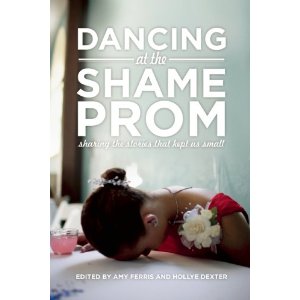
Little did I know that three years later, I would  be asked to write an essay on shame and have it published in by Seal Press. The book is Dancing at the Shame Prom and it was released Sept. 18th 2012. Two weeks later it had already gone into its second printing! Here is an excerpt from my essay. PLEASE buy the book!
STINKIN’ SHAME
Robyn Hatcher
“Mm, mm, mm, that’s a stinkin’ shame!” was a common chorus in the songs of my childhood. That tone seemed to be reserved for whenever an African-American individual was caught doing something stupid, violent or otherwise shameful.  “Mm, mm, mm that’s a stinkin’ shame” Meaning: ‘That fool just set back the whole black race.’
Watching the evening news was a breeding ground for the Stinkin’ Shame Chorus. I grew up in the sixties and seventies; a time when news reporting was taken more seriously. News anchors were authorities; they were the arbiters of what was good and right and what was bad and wrong. And almost every evening at 6pm a similar scenario took place in my family. An intelligent looking Caucasian reporter (because they were all intelligent looking back then - and Caucasian) started a story about an armed robbery, a riot, a murder, arson or some other horrific crime. We often watched TV with my mother’s family – aunts, uncles, grandmother. They were waiting- anticipating the moment when the photo splashed across the screen.  If the perpetrator was black, there was guaranteed to be at least one utterance of the Stinkin Shame Refrain. Sometimes the whole choir sang it. If the perpetrator of the crime turned out NOT to be black, there was an audible sigh of relief, often punctuated with someone saying what everyone else was thinking: “Thank God he wasn’t black.”
This, I believe, was the origin of both my shame about my racial identity and my aversion to watching or reading the news.  It wasn’t until the 2008 election of the first black president that I realized how much shame I had been carrying….”
Read the rest of my essay in Dancing at the Shame Prom

Friday, August 24, 2012

Can Your Voice Be Holding You Back at Work?


38% of our communication is conveyed through the sound of our voice and on the phone our voice accounts for 84% of our message. That’s why having a voice that conveys confidence and enthusiasm is so important.

People form an opinion about us within 2 seconds of meeting us. Most of those opinions or impressions are formed in a primitive part of our brain; the same part of the brain animals get their “animal instinct” from.  Like animals, we listen for tones in the voice that tell us whether the person we’ve just met is trustworthy, confident, honest, intelligent, enthusiastic, positive and safe to be with.

Because we instinctively evaluate and judge the sound of the communication before we evaluate the actual words being said, women, with higher pitched voices are often at a disadvantage. I believe there are two reasons that higher pitched voices are not taken as seriously. First of all, since all children start off with adorable high pitched voices, a high pitched voice makes us seem young and inexperienced. And second, in the animal kingdom, higher pitched sounds are often used to give off warnings of danger or to express fear, anxiety and disapproval. So a woman who does not work to modulate the pitch of her voice either comes off as childlike and insecure or shrill and anxious – not particularly effective qualities in the workplace.

Saturday, August 4, 2012

From Shy to Shining!


I recently had someone ask me on twitter: "How did you get from Shy to shining?"

I decided to answer that question on my blog so I could easily share it with everyone. Below is an excerpt from the introduction to my soon to be published BOOK which answers this question. Of course overcoming any ingrained habit is a life long challenge but there are ways to do it.

So... how did I go from shy to shining"  I made a very deliberate choice.  Somehow I knew that I did not want to continue being type cast as the shy background player in the movie of my life. I yearned to step out of that role. It was suffocating me but I didn’t feel capable of being anyone else. Shai was familiar, she was comfortable, she was well liked, respected even, but she was driving me crazy!  If you are reading this book, chances are there is a quality or habit that you feel locked into that you would like to release. That’s just how I felt.  So, I made a choice. The deliberate choice I made to step out of my shyness wasn’t premeditated but as soon as I made it, I knew it was right. 

Thursday, August 2, 2012

Blank, Blocked or Too Scared to Share!

I knew I wanted to do a blog post but nothing was jumping out at me. (I also stubbornly refused to look at the list of possible topics I had written months ago- go figure!) Instead I sent out a tweet about staring at a blank page. I very quickly got a reply from @systematizeme. “Blank page… many fear a blank mind when preparing to speak… I think you are off to a great post” and of course that got me thinking.  (Thank You Latosha!) What is it that stops us from speaking, writing, and sometimes even thinking what’s in our hearts or on our minds? Are we really blocked or are we just too scared to express ourselves?

Monday, July 16, 2012

Afraid of Public Speaking?


by Linda Rosenblum

Public speaking scares me more than almost anything in this world.  Standing in front of a room filled with people staring at me with blank eyes while I stammer on about a random topic literally makes me want to crawl in a hole and never come out.  I fear their deadpan expressions; I fear their equivocal silence.  But most importantly, I fear their judgment.  My anxiety lies in a panic that my listeners are having negative thoughts about me.  However, I know that this fear is irrational and that public speaking is completely unavoidable.  Additionally, I realize that having good verbal communication skills is absolutely essential to succeeding in the professional world.  Therefore, I looked towards Robyn's teachings for advice in order to create a better presence for myself in front of an audience.  By implementing these simple techniques, I find it much easier to speak in public settings.